Peer-reviewed Open access CC BY 4.0 ISSN 2577-2279
International Journal of Human Anatomy
A journal of human anatomy and anatomical sciences — anatomical variation, morphometry, imaging, functional relationships and anatomy education across cadaveric, imaging and living-population studies.
Article processing charge $1,800 · payable only after acceptance · authors retain copyright
What IJHA publishes
Aims & scopeIJHA publishes original research, reviews and educational studies anchored in human structure and form. A manuscript belongs here when it reports a clear anatomical question, documents its specimens or imaging transparently, and produces a measurable anatomical outcome, variation or educational effect.
The journal gives particular attention to anatomical variation and morphometry: carefully documented, reproducible evidence that improves understanding of human structure across populations and supports anatomical, educational and clinical interpretation.
Variation with consequences
Systematic and regional anatomy, surface landmarks, anatomical variations and anomalies, and surgical approaches where the variation changes what a clinician should expect.
Measurement and population form
Morphometric and anthropometric studies with stated sampling, validated measurement protocols and statistics appropriate to anatomical datasets.
Normal sectional anatomy
CT, MRI, CBCT, ultrasound and 3D reconstruction of normal anatomy, reported with acquisition parameters, reconstruction settings and interpretation criteria.
Embryology and tissue organization
Embryological development, organogenesis, congenital malformation, and microscopic tissue organization examined for its anatomical significance.
Teaching, measured
Curriculum design, dissection and digital-atlas methods, and assessment studies that define learning objectives and report measurable outcomes.
Preparation and documentation
Dissection, preservation and plastination methods, and specimen documentation standards, validated against anatomical findings.
A manuscript fits when
- it describes a clear anatomical question or structure;
- specimen sources, imaging parameters and methods are reported transparently;
- there is a measurable anatomical outcome, variation or educational impact;
- the conclusions align with the anatomical evidence presented.
Better placed elsewhere
- purely molecular or cellular studies without anatomical context;
- clinical case reports that do not describe anatomical variation or structure;
- technical studies without validated anatomical findings or imaging results;
- work in animal models that answers no human anatomical question.
Nomenclature follows Terminologia Anatomica. Figures carry labeled structures and scale information. Authors unsure of fit are invited to send a brief pre-submission enquiry to the editorial office.
Most recent research
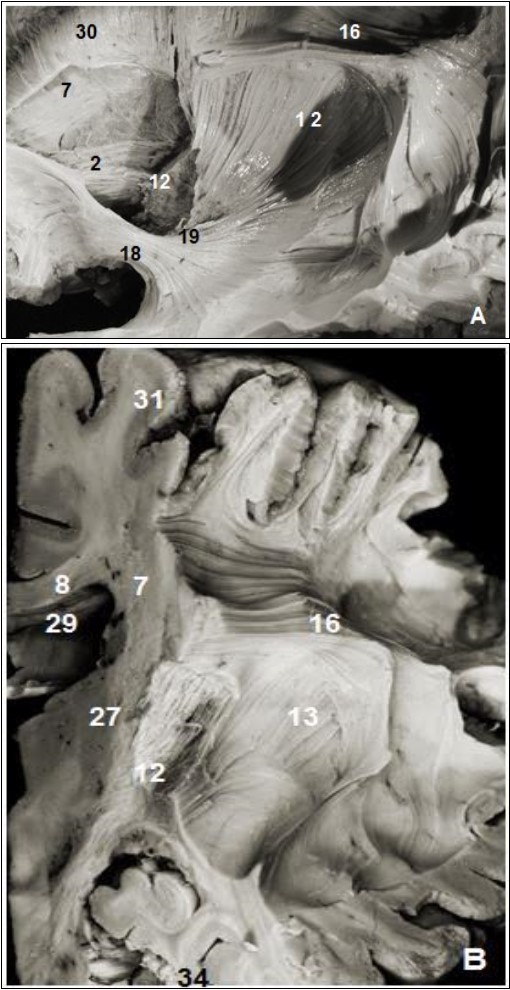
38 articles · 2017–2024Effects of a Novelty Virtual Interactive Brain Atlas on Student Perception of Neuroanatomy
Davies H.C, Edwards D.N, George J et al.
pp. 1–14
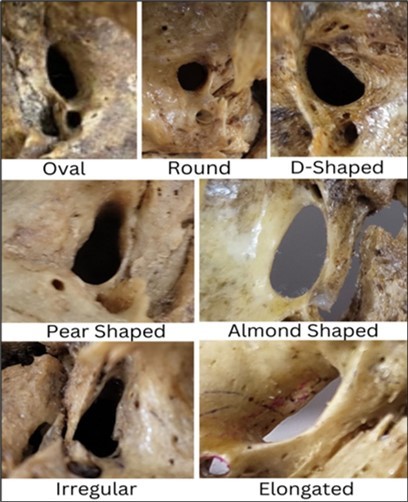
Morphological Variations and Morphometric Analysis of Foramen Ovale in South Indian Population
Supriya Garapati, Ariyanachi Kaliappan, Subhashini Rani Vuba et al.
pp. 25–32
The history of embalming in the era of anatomists of the XV-XVIII centuries
Chilingaridi Svetlana Ninelievna, Shemyakov Sergey Evgenievich, Milyukov Vladimir Yefimovich et al.
pp. 19–24
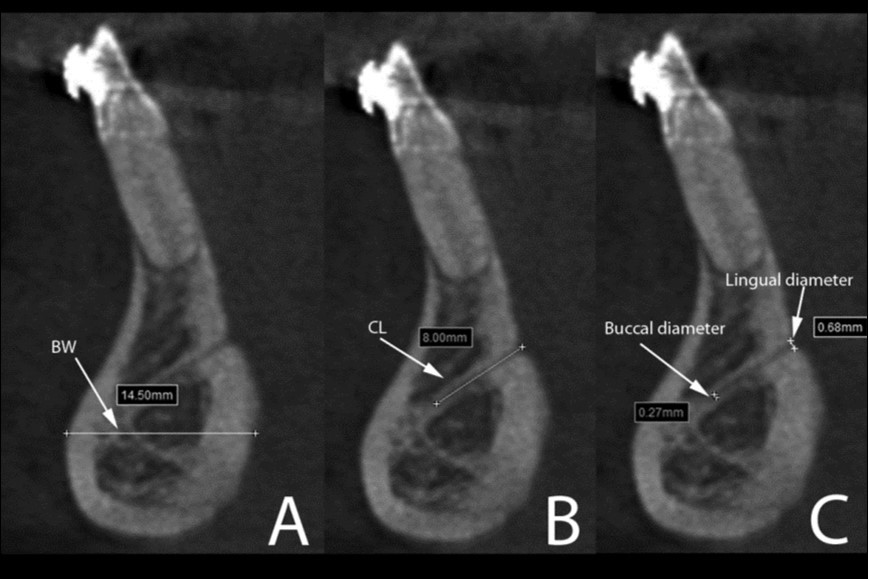
New Classification for Bifurcated Mandibular Neural Canal
Xiang Wang, Hao Yang, Yue Wu et al.
pp. 8–18
Pericardiocentesis Procedure: Anatomical Structures and Approaches
Divia Paul. A, Subramanyam K, Meera Jacob, Ramakrishna Avadhani
pp. 1–7
Variant Trifurcation of the Ulnar Nerve in Guyon’s Canal of the Human Wrist: Case report
Tagreed Fathi Ali, Khalid Musa Fadlelmula
pp. 33–37
Article-type labels in research records reflect the category used at publication. Current submissions use Original Research, Review Article, Case Report or Technical Note; see the Instructions for Authors for limits and requirements.
Editorial oversight
26 editors · 14 countries · 17 ORCID iDsThe Editor-in-Chief conducts the initial scope assessment. Manuscripts suitable for further consideration are assigned to a specialist in the relevant anatomical field. The editors below are named with their institution and, where registered, their ORCID iD, so that any author can verify who would handle their manuscript.
Editor-in-Chief
Abdelmonem Awad Mustafa Hegazy
Professor, Zarqa University
Abdelmonem, Hegazy, Anatomy, Embryology, Zagazig University
0000-0002-5993-6618Editorial Board
Joe Iwanaga
Tulane University, New Orleans, LA
Clinical Anatomy, Head and Neck anatomy, Oral and Maxillofacial Surgery, Dentistry.
0000-0002-8502-7952Editorial Board
Wael Amin Nasr El-Din
Professor and Head, Arabian Gulf University, Manama
Clinical Anatomy, Radiological Anatomy, Neuroanatomy, Histopathology, Experimental biology, Medical Education.
0000-0003-3673-990XEditorial Board
Hayato Terayama
associate professor, Tokai University School of Medicine, 143 Shimokasuya, Isehara-si, Kanagawa
Urological gross anatomy Testicular andrology Testicular reprodactive immunology
0000-0002-7053-8418Editorial Board
Randy Kulesza
Lake Erie College of Osteopathic Medicine, United States
Neuroanatomy Neurobiology Neurodegeneration Pathological Anatomy Rare anomalies in dissection
0000-0001-8589-1532Editorial Board
Shifan Khanday
Associate Professor , Dubai Medical College for Girls, Dubai, Dubai
Human Anatomy, Gross Anatomy, Anatomy, Morphometrics, Internal Medicine, Medical Science, Surgery, Genetics, Higher Education, Dissection
0000-0002-4350-0393How a manuscript is handled
Editorial policiesStep 1
Scope screening
The Editor-in-Chief conducts an initial assessment of scope, quality, completeness and ethical documentation.
Step 2
Single-blind peer review
Manuscripts that proceed to external peer review are normally assessed by at least two independent specialists in the relevant anatomical field.
Step 3
Decision
Authors receive a reasoned editorial decision and, where external review has occurred, the relevant reviewer comments.
Step 4
Publication
Accepted articles are copy-edited, typeset, registered with a Crossref DOI and published open access under CC BY 4.0.
| Publishing standard | IJHA |
|---|---|
| Peer-review model | Single-blind; manuscripts sent for external review normally have at least two independent reviewers |
| Article processing charge | USD 1,800 · verified student and trainee rate USD 1,350 |
| When the charge applies | Only after acceptance |
| License | CC BY 4.0 |
| Copyright | Retained by the authors |
| Preprints | Permitted; self-archiving without embargo |
| Persistent identifier | Crossref DOI, prefix 10.14302 |
| Ethics framework | COPE; institutional review-board approval; Declaration of Helsinki |
| Human material | Body-donation program protocols; anonymization of cadaveric specimens |
| Corrections | Errata, corrigenda and retractions issued under COPE guidance |
Before you submit
Is my study within scope?
If it reports a clear anatomical question about human structure — a variation, a morphometric or anthropometric measurement, normal sectional imaging, a developmental or microanatomical finding, or a measured anatomy-teaching outcome — it is in scope. Studies in animal models that answer no human anatomical question, and molecular or cellular work without anatomical context, are not.
How will my manuscript be reviewed?
The Editor-in-Chief conducts the initial assessment. Manuscripts that proceed to external peer review are normally assessed by at least two independent specialists under the journal’s single-blind model. Authors receive a reasoned editorial decision and, where applicable, reviewer comments.
What does the article processing charge cover, and when is it paid?
The charge is USD 1,800, with a verified rate of USD 1,350 for students and trainees, and it is payable only after a manuscript has been accepted. It covers peer-review coordination, copy-editing, typesetting, Crossref DOI registration, open-access hosting and long-term availability. There are no separate submission or page charges.
Who holds copyright, and what may I do with my article?
Authors retain copyright. Articles are published under a Creative Commons Attribution 4.0 International license, so anyone may share and adapt the work, including commercially, provided the authors are credited. Authors may post preprints before submission and self-archive the published version without an embargo.
What are the requirements for work on cadaveric or donor material?
Studies using human material must document institutional review-board or ethics-committee approval, comply with the protocols of the body-donation program that supplied the specimens, follow the principles of the Declaration of Helsinki, and anonymize cadaveric specimens. Specimen sources and ethical approvals are reported in the manuscript.
How will my article be found and cited?
Every article receives a Crossref DOI under the prefix 10.14302, which makes it permanently citable and resolvable, and is published in full text without a paywall or a registration barrier. The journal is registered under ISSN 2577-2279.
Submit to IJHA
Manuscripts anchored in human anatomy, with transparent methods and a measurable anatomical outcome, are welcome year-round. If you are unsure whether your study fits, send a brief pre-submission enquiry before preparing a full manuscript.
Charge applies only on acceptance CC BY 4.0 Authors retain copyright Crossref DOI