Journal of Ophthalmic Science

Submit Manuscript

Open Access Pub· Peer-reviewed· Open access since 2015

Journal of Ophthalmic Science

Ophthalmic science and vision research — from ocular biology and preclinical models to diagnosis, treatment, rehabilitation and delivery of eye care.

  • 2470-0436ISSN (online)
  • 42Articles
  • 3 / 11Volumes / issues
  • 13Editorial board
  • CC BY 4.0License

Submit a manuscript Aims & scope

Article processing charge USD 1,200 (USD 900 student rate), billed only after acceptance. No submission fee.

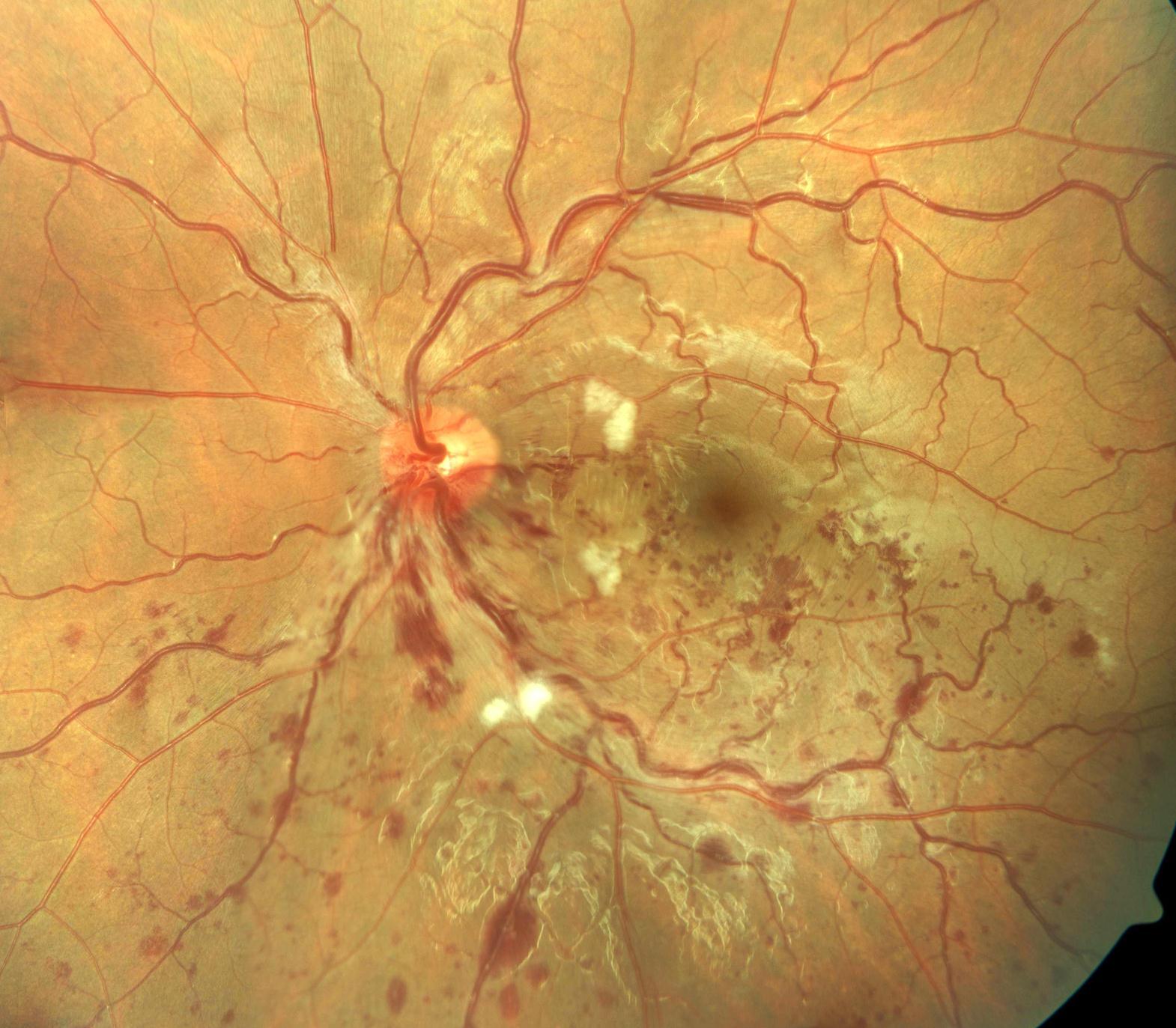
Color fundus photograph of a left eye showing branch retinal vein occlusion: a dilated, tortuous venous segment with flame-shaped and dot-blot hemorrhages, retinal edema and cotton-wool spots along the superotemporal arcade.
Plate I · Figure 1 Branch Retinal Vein Occlusion in Factor V Leiden Mutation
Yan Tong Koh, Srinivasan Sanjay · 2015
10.14302/issn.2470-0436.jos-14-528 · CC BY 4.0
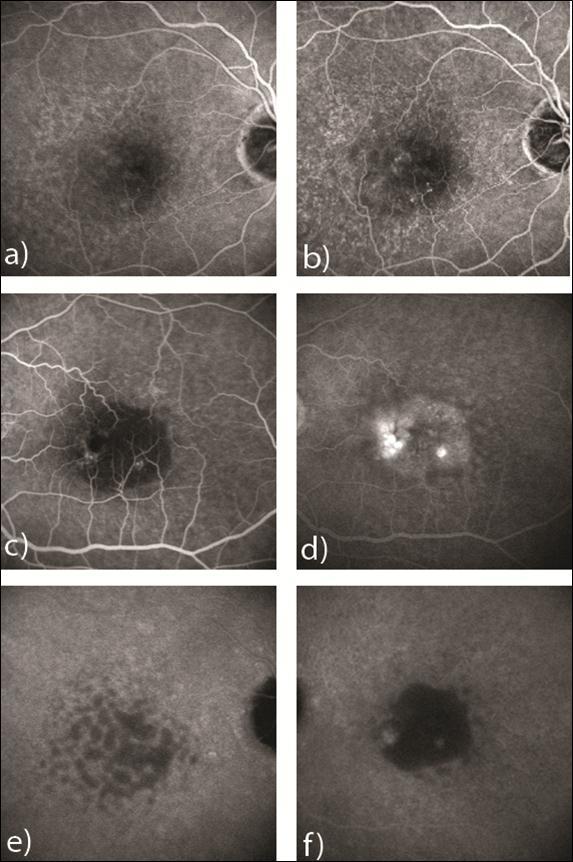
Six-panel fluorescein angiography plate of both eyes, labeled a to f, showing early and late phases at diagnosis and six months later in idiopathic macular telangiectasia.
Plate II · Figure 1 Idiopathic Macular Telangiectasia Associated with Large Soft Drusen and Retinal Angiomatous Proliferation
Claudio Campa, Perri Paolo · 2016
10.14302/issn.2470-0436.jos-15-710 · CC BY 4.0
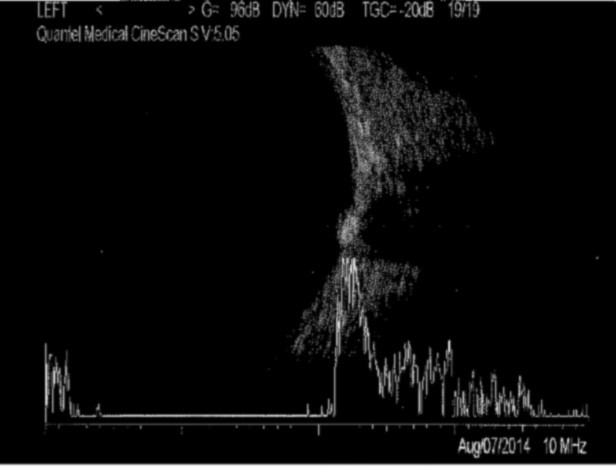
B-scan ocular ultrasonogram with the accompanying A-scan trace, showing a highly reflective calcified deposit at the optic nerve head characteristic of optic disc drusen.
Plate III · Figure 3c Rapidly Progressing Visual Loss Associated with Optic Nerve Head Drusen: Is there a Role for Lowering Intraocular Pressure?
Karim El-Assal, Andrew J. Tatham · 2016
10.14302/issn.2470-0436.jos-15-763 · CC BY 4.0

I

What belongs in this journal

The Journal of Ophthalmic Science publishes basic, experimental, preclinical, clinical, translational and population research whose principal contribution concerns the eye, visual system, eye disease or delivery of eye care.

Within scope

  • Clinical studies and case series across the anterior and posterior segment
  • Ocular imaging — OCT, fundus photography, angiography, ultrasound — and diagnostic accuracy
  • Surgical technique, device evaluation and post-operative outcomes
  • Ocular biology, visual neuroscience and preclinical eye-disease models
  • Ophthalmic therapeutics, biomaterials, devices and engineering
  • Well-documented case reports of instructive or uncommon presentations
  • Eye-health services, access to vision care and ophthalmic epidemiology

Better placed elsewhere

  • Laboratory, engineering or materials work without a clear ophthalmic question
  • Method or algorithm papers whose evaluation is not on ophthalmic data
  • Studies of systemic disease in which ocular findings are incidental
  • Reviews without a defined contribution to ophthalmic or vision science

II

The record behind the scope

One published article for each area above, drawn from the 42 papers in the archive.

Retina and macular disease

Persistent Neovascular Exudation in Patients with Exudative Age-Related Macular Degeneration who have Choroid Imaging Biomarkers of Non-Neovascular Choroidal Pathology: Simultaneous Choroidal Hyperpermeability and Angiogenesis

Research Article · 2025 · Vol 3, No 2

Cornea and anterior segment

A New Technology for Optimized UV-A-Light Energy Transfer to the Cornea in Corneal Crosslinking for Keratoconus

Research Article · 2024 · Vol 3, No 2

Glaucoma

Glaucoma Literacy in a Portuguese Population

Research Article · 2024 · Vol 3, No 2

Ocular therapeutics and translational research

A Network Pharmacology-Based Strategy For Predicting Therapy Targets Of Beta-Sitosterol In Treating Diabetic Retinopathy

Research Article · 2024 · Vol 3, No 1

Ocular oncology and orbital disease

Adenoid Cystic Carcinoma of the Lacrimal Gland in a 36 year Old Male

Case Report · 2023 · Vol 3, No 1

Neuro-ophthalmology

Cerebrovascular Infarction Presenting as Bilateral Internuclear Ophthalmoplegia in a 75 y/o Patient

Case Report · 2021 · Vol 2, No 4

Ocular imaging

High-Resolution SD-OCT and EDI-OCT in the Evaluation and Management of Multifocal Serpigenoed Choroditis

Research Article · 2019 · Vol 2, No 2

Cataract and intraocular lens surgery

Femtosecond Laser in Cataract Surgery: What Makes it Worth it? or not?

Research Article · 2019 · Vol 2, No 1

Uveitis and ocular inflammation

Early Versus Late Immunomodulatory Therapy in Vogt-Koyanagi-Harada disease

Research Article · 2017 · Vol 1, No 4

Eye-health services and vision-care access

Accessibility and Barriers to Uptake of Ophthalmic Services among Rural Communities in the Upper Denkyira West District, Ghana

Research Article · 2019 · Vol 2, No 1

Browse the full archive

III

Current issue — Volume 3, Number 3

Most recent article published 3 July 2026.

The complete issue

IV

Editorial oversight

13 editors in 8 countries handle submissions by subspecialty. Those below are shown with the affiliation and ORCID record held for them; the full board is listed on the editorial board page.

Editor-in-Chief

Federico Gonzalez-Fernandez

University of Mississippi Medical Center, United States

Ophthalmic pathology and retinal cell biology

Editorial Board

Argyrios Tzamalis

Aristotle University of Thessaloniki, Greece

Cornea and anterior segment

ORCID 0000-0002-3172-8542

Editorial Board

Brian M. DeBroff

Yale University, United States

Ophthalmology and visual science

ORCID 0000-0003-3925-043X

Editorial Board

Emanuela Interlandi

Ospedale del Mare, Naples, Italy

Uveitis and retinal degeneration

ORCID 0000-0002-3993-9803

Editorial Board

Elizabeth McElnea

University Hospital Galway, Ireland

Clinical ophthalmology

ORCID 0000-0001-7709-8999

Editorial Board

Zheng Jiang

Baylor College of Medicine, United States

Retinal neurobiology and electrophysiology

ORCID 0009-0009-7359-3875

The full editorial board

V

How a manuscript is handled

Editorial decisions rest on scientific merit and are independent of article charges, membership and any optional service.

Peer review
Single-blind. Manuscripts that proceed to external peer review are normally evaluated by at least two independent ophthalmology specialists.
Reviewer selection
The handling editor assigns reviewers by subspecialty — anterior segment, glaucoma, retina, neuro-ophthalmology, pediatric ophthalmology or oculoplastics — and screens them for conflicts of interest before assignment.
Decision
Review timing depends on the manuscript, reviewer availability and any ethics or integrity questions. Decisions may invite revision, accept or reject the manuscript.
Measured record
Across the 42 articles published to date, the median interval from submission to acceptance was 41 days (interquartile range 23–98). Acceptance follows revision, so this is longer than a first decision.
Research ethics
Studies in human participants must comply with the Declaration of Helsinki and carry institutional review board approval. Animal work follows the ARVO Statement for the Use of Animals in Ophthalmic and Vision Research. Prospective interventional trials must be be registered in an accepted public registry at or before the first participant provides consent for enrollment.
Patient privacy in ophthalmic images
Identifiable ophthalmic, periocular or facial images and case details require written consent for publication. Authors must remove unnecessary identifiers and follow the approved privacy and publication-consent policy for every image type.
Reporting standards
CONSORT for randomized trials, STROBE for observational studies, STARD for diagnostic accuracy and the CARE checklist for case reports.
Originality and data
All submissions are screened with iThenticate, including for substantial overlap with the authors' own prior work. A data availability statement is required for every empirical manuscript.
Governance
The journal follows COPE and ICMJE guidance on authorship, conflicts of interest, corrections and retractions. Editors and reviewers recuse themselves where objectivity could be compromised.
Copyright and reuse
Authors retain copyright. Every article is published under Creative Commons Attribution 4.0 and may be self-archived without embargo.
Read the editorial policies in full

VI

What publication costs, and what it buys

One charge, raised only if a manuscript is accepted. Nothing is payable to submit, and the charge has no bearing on the editorial decision.

Full waivers may be requested by eligible low-income-country corresponding authors without funding; partial reductions may be requested for lower-middle-income countries or documented hardship. Requests are made at initial submission and remain separate from peer review.
RateChargeWhen it is raised
StandardUSD 1,200On acceptance
StudentUSD 900On acceptance
SubmissionNone
  • Peer-review coordination and editorial handling
  • Copy-editing, typesetting and production of the final article
  • A Crossref DOI, so the published version stays citable
  • Full text hosted free to every reader, with no subscription or paywall
  • CC BY 4.0 publication with copyright retained by the authors
  • No page, color or supplementary-file surcharges

Full charge and waiver terms

VIII

Questions authors ask first

Is my study within the scope of the Journal of Ophthalmic Science?

The journal publishes basic, experimental, preclinical, clinical, translational and population research whose primary contribution concerns the eye, visual system, eye disease or delivery of eye care. Ophthalmic biomaterials, engineering and computational work are considered when their question and validation are clearly ophthalmic.

What does it cost to publish, and when is the charge raised?

The article processing charge is USD 1,200, or USD 900 at the student rate. It is billed only after a manuscript has been accepted; there is no submission fee and no page, color or supplementary-file surcharge. Corresponding authors in low-income countries without institutional, grant or sponsor funding may request a full waiver; lower-middle-income-country authors and authors with documented hardship may request a partial reduction at initial submission. Decisions are separate from peer review.

How is a manuscript reviewed?

Review is single-blind. Manuscripts that proceed to external peer review are normally evaluated by at least two independent ophthalmology specialists with relevant expertise. Review timing depends on the manuscript, reviewer availability and any ethics or integrity questions.

Who holds copyright, and can I post the article elsewhere?

Authors retain copyright. Articles are published under Creative Commons Attribution 4.0, so the accepted and published versions may be deposited in an institutional or subject repository immediately, with no embargo.

What consent do I need for ophthalmic images?

Identifiable ophthalmic, periocular or facial images and case details require written consent for publication. Authors must remove unnecessary identifiers and follow the approved privacy and publication-consent policy for every image type.

How is my article identified and found?

Articles carry a Crossref DOI under the prefix 10.14302, which gives the published version a citable, permanent identifier. The journal is registered as ISSN 2470-0436 with the ISSN International Centre, and the full text is free to read without registration or subscription.

Submit to the Journal of Ophthalmic Science

Manuscripts are received through the editorial office and assigned to a subspecialty editor. Read the instructions for authors before preparing your files.

Submit a manuscript Instructions for authors

Journal of Ophthalmic Science · ISSN 2470-0436 (online) · Crossref DOI prefix 10.14302 · Published by Open Access Pub · 42 articles in 3 volumes and 11 issues, 2015–2026.

Menu